Wedding Centerpieces on a Budget (No Florist Required)
By Iris Calloway · August 12, 2026
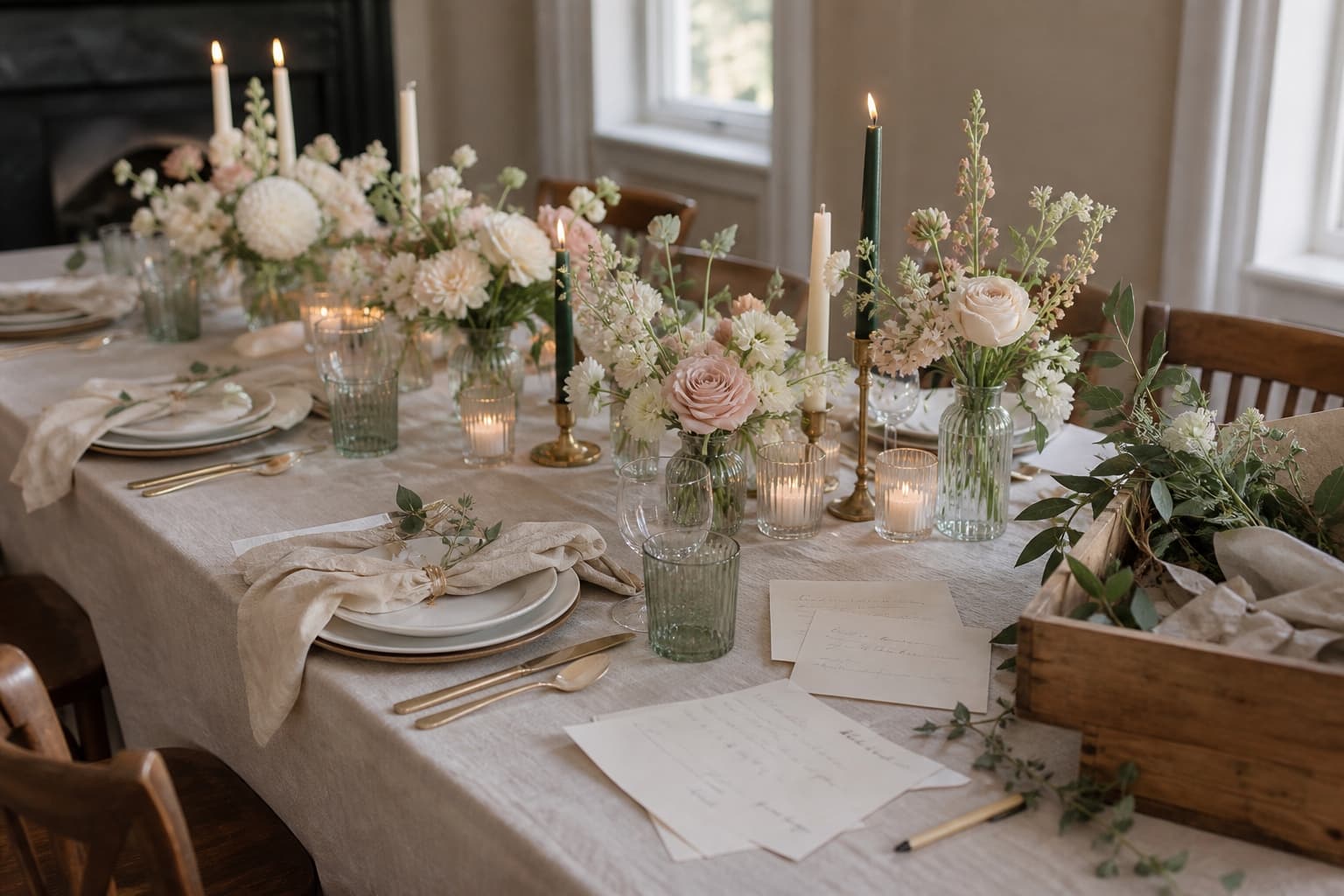
Budget wedding centerpieces go wrong in one of two ways. Either every table becomes a separate craft project, or the couple prices the flowers and forgets the vessels, candles, tools, transport, setup and the person removing everything at midnight.
The cheaper method is also the calmer one: design a small system, repeat it, and count every component before buying the first item. A table does not need to look expensive. It needs a clear shape, enough visual weight for the room and nothing that prevents six people from speaking to one another.
This guide uses original design frameworks and worked budgets rather than photographs of somebody else’s wedding. Your venue, table dimensions and fire rules determine the final version.
Set a per-table number before choosing a style
Decor has a habit of being priced in harmless little units. A $4 vase, $3 candle and $2 stem all sound modest. Across 15 tables, repeated in clusters, they become a category.
Start with the complete decoration budget. Remove fixed items such as delivery, hired ladders, entrance signage and ceremony decor. Divide what remains by the number of guest tables plus any head, cake, welcome or bar tables that require a design.
Here is a worked example:
- Total decoration allowance: $1,050
- Fixed delivery and tools: $180
- Table decoration money: $1,050 − $180 = $870
- Guest tables: 12
- Additional decorated tables: 3
- Total tables: 12 + 3 = 15
- Working ceiling: $870 ÷ 15 tables = $58 per table
That $58 must include consumables and the allocated cost of anything bought. If you expect to resell vases, do not subtract imaginary resale income from today’s budget. Record it later if it happens.
Put the number in the wedding planner spreadsheet, then compare it with the decoration share in the wedding budget breakdown. A centerpiece is not “only decor” when it displaces money from food, transport or shelter from rain.
Choose one of four repeatable centerpiece systems
The system is the underlying recipe. Colour and material can change; the component count should not. Four systems work particularly well without a florist because they tolerate small variations.
1. The low cluster
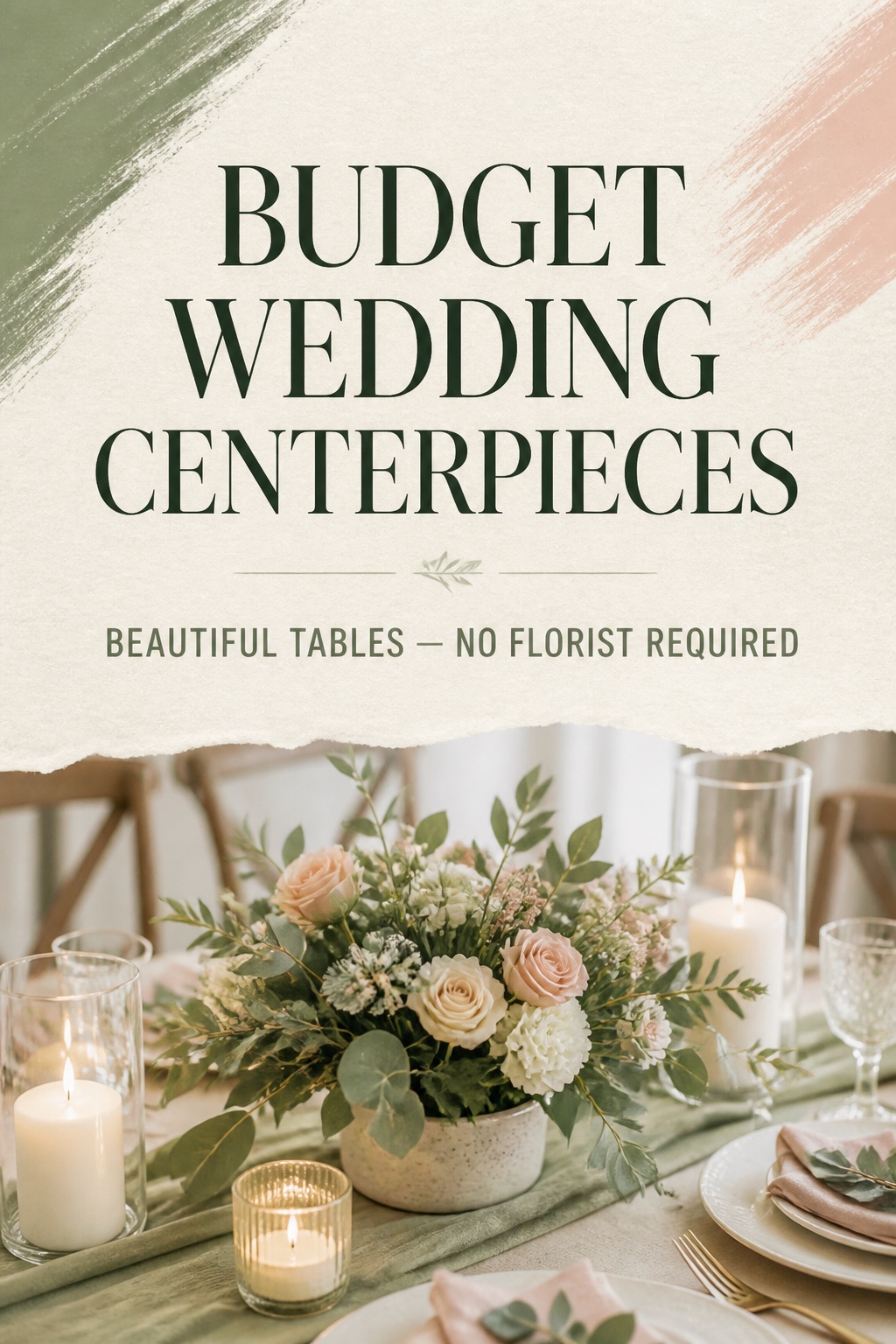
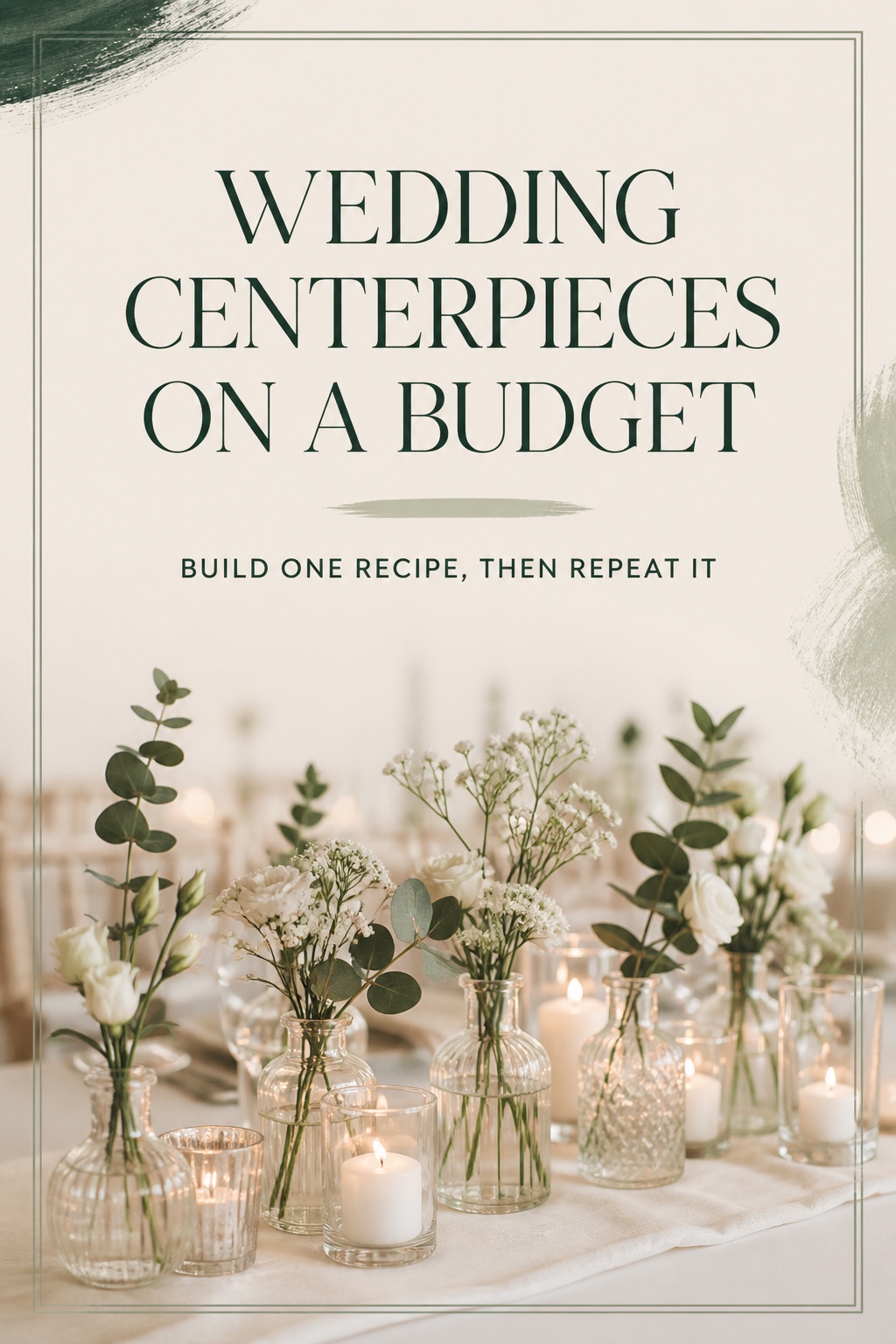
Use three to five small vessels at varied but modest heights, plus two or three candles. Each vessel holds one to three stems. The cluster has enough width for a round table without requiring a large floral arrangement.
This is forgiving because every stem does not need to match. Keep one repeated element across all tables: the same vase colour, one flower variety or the same greenery. Variation then looks intentional.
2. The runner
Use a fabric or paper runner, low candles and small pockets of greenery or fruit. This suits long tables because it creates rhythm rather than one isolated object. Price by linear foot, including the gaps, and keep shared platters in mind if food will be served family-style.
3. The single object
Use one substantial object: a potted plant, lantern, bowl of seasonal produce or broad vessel with branches. The object must be large enough for the table but low or open enough for conversation. It is simple to count and quick to place.
4. The useful centerpiece
Let table numbers, bottles of water, bread, menus or dessert stands carry some visual work. “Useful” does not mean cluttered. It means one well-designed item performs two jobs, reducing the number of decorative objects competing for space.
Pick one system for at least 80% of the tables. Give a head table or entrance one variation if needed. Fifteen unique tables are a styling portfolio, not a practical setup plan.
Price the whole recipe, not its prettiest ingredient
Write a bill of materials for one table. Give every item a quantity, unit price, source, ownership status and packing requirement. Include tax, delivery and breakage. If an object comes in a pack of six and you need seven, the purchase quantity is twelve.
An example low-cluster recipe might be:
| Component | Quantity | Unit cost | Table cost |
|---|---|---|---|
| Small vessels | 4 | $3.50 | $14.00 |
| Seasonal stems | 8 | $2.25 | $18.00 |
| Votive holders | 3 | $1.50 | $4.50 |
| LED votives | 3 | $1.20 | $3.60 |
| Table number | 1 | $2.40 | $2.40 |
| Wire, tape and breakage allocation | 1 | $3.50 | $3.50 |
| Total per table | $46.00 |
For 12 guest tables, the visible centrepieces cost 12 × $46 = $552. Add three simplified auxiliary tables at $22 each: 3 × $22 = $66. Add $80 for delivery crates and tools. The complete project is $552 + $66 + $80 = $698.
That is the number to compare with a professional quote. A florist quote may include better wholesale buying, conditioning, design, delivery, setup, retrieval and risk. DIY is cheaper only when the total money and labour suit you.

Use flowers in ways that do not require florist mechanics
Complex floral work is a skilled trade. Foam-free mechanics, heavy installations and heat-sensitive stems are poor first projects for the week of your wedding. A no-florist centerpiece should use techniques that remain stable when assembled by a careful beginner.
Bud vases are the most tolerant. Cut each stem to suit one vessel, remove leaves below the water line, and let negative space do the work. Branches in a weighted vase can also be simple, but test the base, height and venue access. A dramatic branch that tips when the table moves is not simple.
Choose flowers by behaviour before colour. Ask a local grower, wholesaler or grocer what is genuinely available that week, how it travels and how long it can remain out of refrigeration. “Seasonal” is not one universal list; climate and supply route matter.
Plan substitutions by shape. If the exact cream flower is unavailable, decide whether you need another round focal flower, a vertical stem or light filler. A shape rule gives the buyer room to solve the problem without redesigning the table in a shop aisle.
Order or buy enough for the tested recipe plus a sensible failure allowance. Ten percent is a workable starting point for sturdy stems; delicate or inconsistent garden material may need more. Count stems, not bunches, because bunch sizes vary.
Make candles safe, permitted and worth the trouble
Candles give a large visual return per dollar, but the venue decides what is allowed. Ask whether flames are prohibited, whether every flame must be enclosed, whether holders need a minimum height, and who is permitted to light them. Local fire requirements and the venue’s insurer may be stricter than your inspiration image.
If open flame is allowed, test burn time and wax behaviour in the actual holder. A taper that drips across hired linen can create a cleaning bill larger than the candle budget. Keep flame well below foliage and away from menus, ribbons and sleeves.
LED candles remove flame risk but not all quality problems. Mixes of blue-white LEDs and warm room light look artificial. Buy one sample, view it after dark and check the battery duration. Replaceable-battery units may be better value for reuse; sealed units may be simpler for one event.
Do not scatter 20 tiny lights where five deliberate points would work. Repetition creates atmosphere. Quantity without spacing creates clutter.
Design for the table people will actually use
A bare hire table is not the working table. Add the full place setting during the mock-up: charger or dinner plate, cutlery, glasses, napkin, place card, menu, favour, water and any shared food. Then measure what remains.
For conversation, test from a seated position. Guests across the table should see one another without leaning around the design. Tall centrepieces can work when the visual mass begins above head level and the base is narrow, but building structurally safe tall arrangements is rarely the easiest DIY route.
For family-style service, reserve a clear landing area for platters. Ask the caterer for approximate platter dimensions and how many arrive at once. A beautiful runner that must be dismantled before the first course has failed its practical test.
Check accessibility too. Keep table numbers readable, paths clear and loose greenery away from place settings. Avoid strong scent around food and ask about severe allergies before making nuts, loose herbs or highly fragrant flowers the central material.
Finally, view the design against the room. A low cluster that looks complete on a kitchen table may disappear beneath a high ceiling. Solve scale with repeated candlelight, stronger colour, linens or one room-level element supplied safely by the venue. Do not solve it by making every table dangerously tall.

Borrow, hire and buy with the end in mind
Buying is not automatically cheaper. Sixty matching votive holders at $2.50 cost 60 × $2.50 = $150, before cleaning, storage and transport. A $90 hire price may include crates and remove the problem the next morning.
Borrowing can work for deliberately mixed objects such as clear jars, brass holders or small ceramic pots. Set a tight specification: acceptable sizes, colours and return condition. Otherwise you receive 40 objects that share only the fact that somebody did not want them.
Compare options using complete cost:
- Buy: item price + tax + delivery + storage + packing − actual resale proceeds later
- Hire: hire price + delivery + damage waiver + cleaning + late-return risk
- Borrow: collection + packing + cleaning + labelled returns + replacement risk
Use a photo inventory. Give every crate a number and record which objects belong to it. If hired goods must be returned, nominate a person and a vehicle before the wedding. The couple should not be counting candlesticks at breakfast.
Build a production schedule, not a craft weekend
Separate tasks by how early they can safely happen. Buying vessels, printing table numbers, cutting runners and labelling crates can happen weeks ahead. Fresh flower conditioning and arrangement cannot.
A sensible sequence is:
Four to eight weeks before: confirm venue rules, complete the test table, lock quantities, order durable items and assign setup responsibility.
One to two weeks before: chase deliveries, wash vessels, test lights, print a placement photograph for each design and pack one crate per table or table group.
Two days before: collect sturdy flowers if their source and conditioning guidance support it, prepare clean buckets and keep them cool and hydrated.
The day before: cut and arrange only materials proven to hold. Protect finished work from heat, pets, wind and curious helpers.
Wedding day: transport upright, place from photographs, add water if required and light candles only at the agreed time.
Time the test table from closed crate to finished design. If one takes 12 minutes and you have 15 tables, placement alone is 12 minutes × 15 = 180 minutes, or three person-hours. Add unloading, corrections and room access. “The venue opens at noon” is not a staffing plan.
Move ceremony decor instead of duplicating it
Reuse works when the object, timing and route cooperate. A pair of grounded arrangements can move from ceremony entrance to dinner room. Bud vases can line an aisle and later join table clusters. A welcome arrangement can move to the bar.
Write the move as a job: object, origin, destination, time, route and named person. Confirm the venue permits it and that photographs or guests will not be disrupted. A vague plan to “reuse the flowers” often means nobody moves them.
Avoid designs that require complete reconstruction. Guests should not wait while helpers dismantle an arch into 30 table pieces. The saving disappears into stress and missing components.
Your wedding day timeline should contain the move, and the 12-month checklist should contain the test and final quantity deadline. Decor is part of operations once it needs a room, vehicle and person.
Know when not to do it yourself
Hire a florist or stylist when the design depends on suspended work, complex mechanics, fragile premium flowers, a very short room-access window, significant ladder work or rapid transfer between sites. Safety and execution are part of the visual result.
Professional help can also be partial. Pay for bouquets and wearables, then handle simple table vessels. Hire someone for delivery and placement using your prepared crates. Ask a florist for one statement arrangement and build the remaining design around candles and linens.
Compare the saved amount with the labour. If DIY saves $600 but needs 25 hours from people whose time is already committed, the rate is $600 ÷ 25 hours = $24 per hour before risk. That may still be worthwhile. It is at least an honest decision.
The final centrepiece test
Seven days before the wedding, the design should be boring on paper. You should know the exact component count, crate count, vehicle, access time, assembly order, lighting rule, person responsible and destination after the event.
The finished table needs to pass five tests:
- It fits after the full place setting is added.
- Seated guests can see and hear one another.
- Every flame or electrical item complies with venue rules.
- One trained helper can reproduce it from a photograph.
- The complete cost stays inside the per-table ceiling.
That discipline does not make the result plain. It creates room for the one good idea to be seen. A repeated group of warm lights, three seasonal stems and a legible table number will usually look more considered than a table full of individually inexpensive things.

Written by
I planned my own wedding on a spreadsheet that grew to twenty-two tabs, and I build planning spreadsheets for a living. This site is that file, cleaned up, plus what I learned about which decisions actually move the number.