Engagement Party Planning on a Budget
By Iris Calloway · August 12, 2026
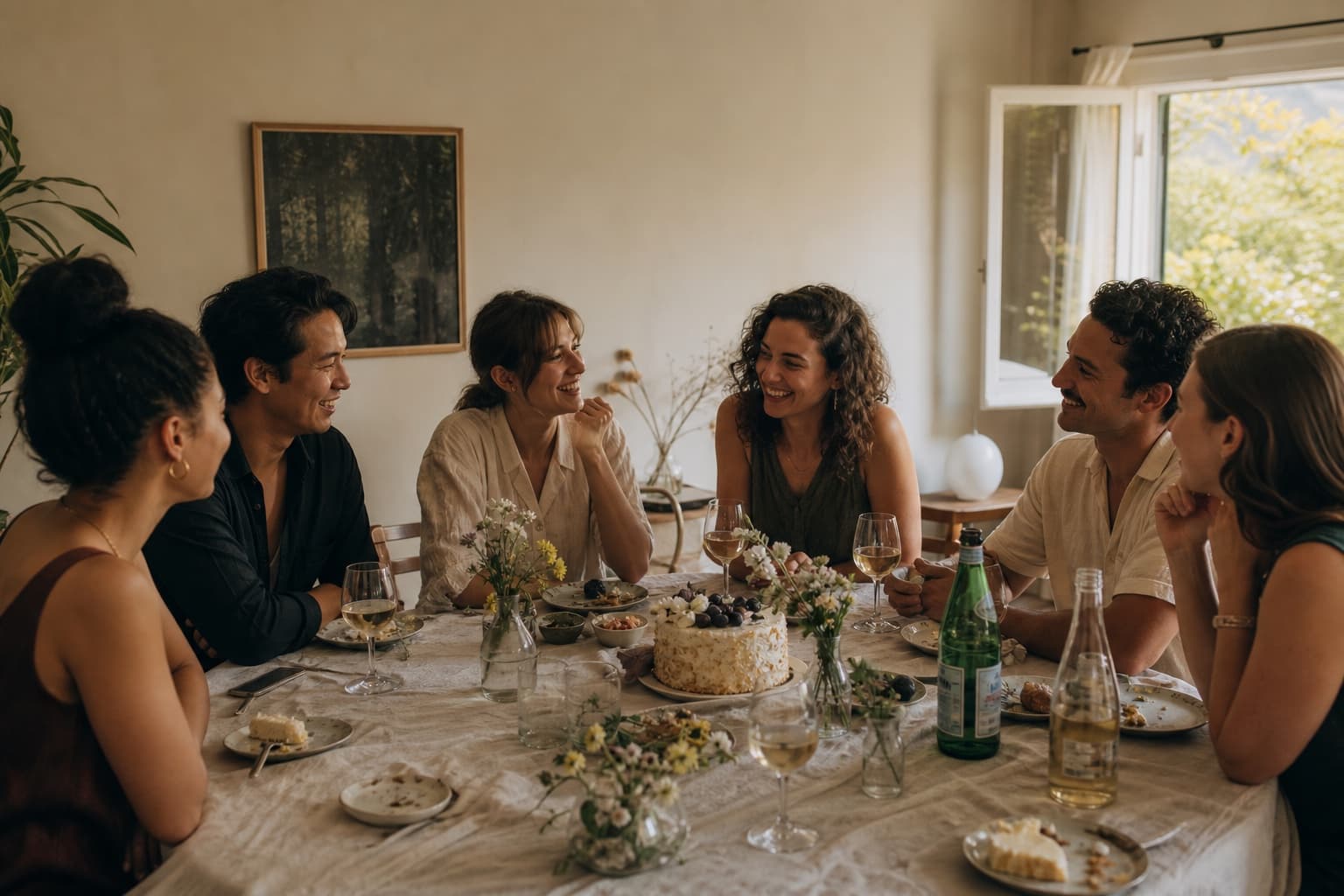
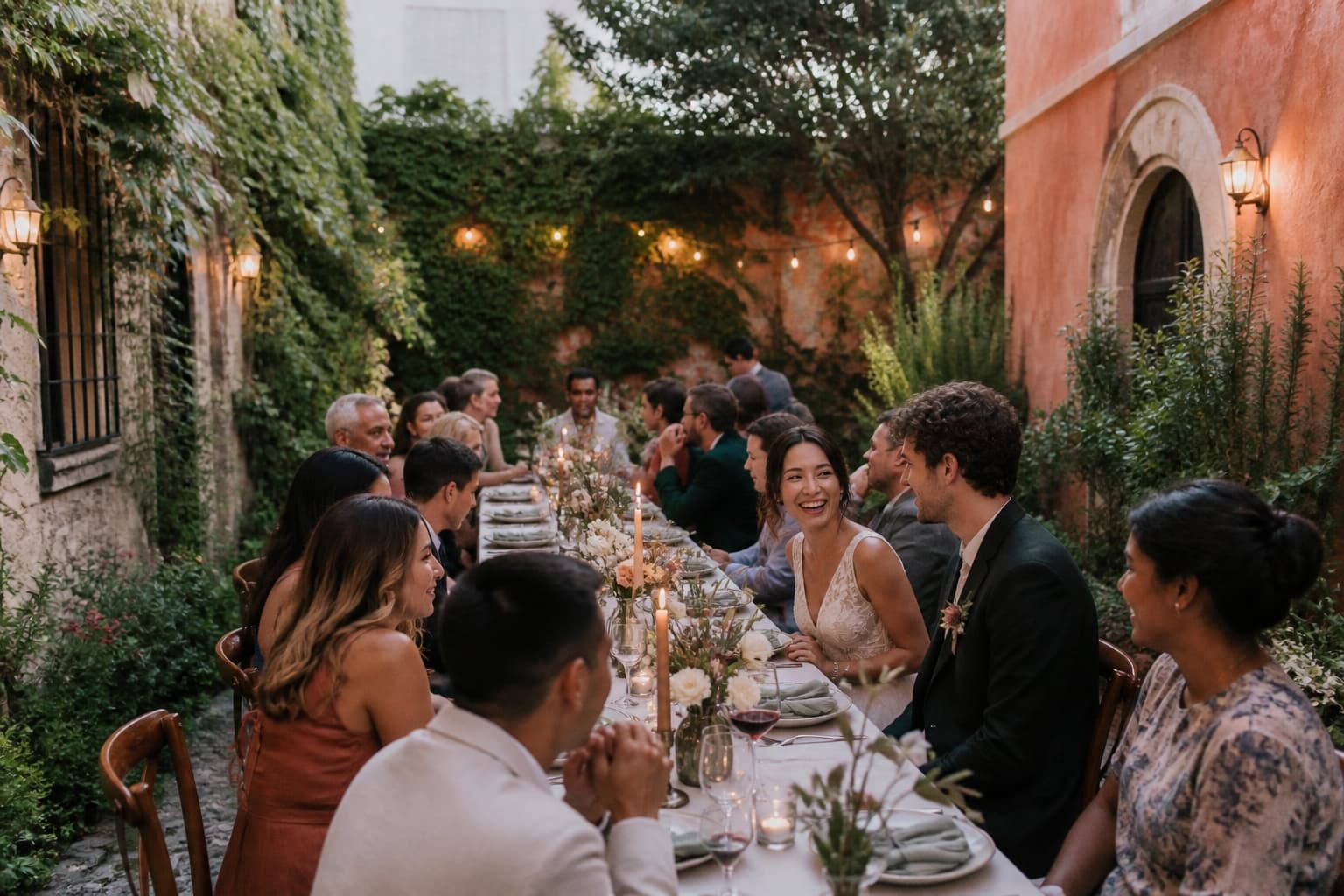
Useful engagement party ideas budget the gathering before they style it. Begin with one distinction: this is not a smaller wedding rehearsal. The party has one useful job, which is to bring people together to mark the news. The moment it requires a venue package, formal stationery, elaborate decor and a full vendor team, it is competing with the event you are still trying to fund.
Planning on a budget therefore begins with a boundary, not a Pinterest board. Decide what this gathering will do, who is paying and the maximum cash available. Then choose a format that is naturally affordable rather than forcing an expensive format through a series of disappointing cuts.

Decide whether you need a party
You can announce an engagement without hosting anything. A family meal, drinks with friends, several small visits or no event at all are all complete choices. Host a party because gathering this group matters to you, not because an engagement appears to come with a compulsory pre-wedding calendar.
Write one sentence describing the purpose. Examples include “Our immediate families have not met,” “We want one relaxed evening with local friends,” or “My parents want to host their relatives.” The sentence helps you reject additions that do not serve it.
If two families want different events, decide whether one combined gathering is practical. Two modest events may cost less than travel and accommodation for one large event, but only if the guest lists do not expand into two versions of the wedding. Put both estimates on paper before agreeing.
The first weeks after engagement already contain financial decisions. The just-engaged guide puts the budget, guest count and conversations before the decorative tasks. The party should fit around those decisions, not delay them while spending begins.
Set a separate cash ceiling
Do not call the engagement party “miscellaneous” inside the wedding budget. Give it a separate ceiling and funding source. If a parent is hosting, ask whether their amount is a party gift or part of a wider wedding contribution. The same $2,000 should not appear in both plans.
Use this simple calculation:
confirmed party cash - fixed costs - contingency = amount available for guests
Worked example: the ceiling is $1,500. You reserve $150, or 10%, for contingency. A community room costs $250 and basic serving hire costs $100. The guest-dependent amount is $1,500 - $150 - $250 - $100 = $1,000.
If food and drink cost $20 per attending guest, $1,000 ÷ $20 = 50 guests. That is a maximum attendance under these assumptions, not an invitation target. If you expect an 85% attendance rate, inviting 58 could produce roughly 49 attendees, but never spend the unconfirmed decline allowance before replies arrive.
Track the party in the wedding planning spreadsheet as its own mini-budget. Keep planned, quoted, contracted and paid amounts separate. A $400 catering estimate is not a $400 bill until the menu, headcount, tax, service and delivery are confirmed.
Build the guest list from the format
Traditional etiquette often assumes that engagement-party guests will also be invited to the wedding. That is the safest expectation to set, particularly for a formal hosted event. If the wedding will be very small, be explicit that the party is a broader local celebration and consider how that message will land before inviting widely.
Start with the people required by the purpose sentence. If the goal is introducing immediate families, the list may be 12. If it is local friends, decide whether colleagues, extended relatives and wedding-party candidates belong before the venue supplies spare capacity.
Use three columns: Must invite, Would like, and Not this event. Give every person a name; “Dad’s side” is not countable. The guest-list ceiling method works here at a smaller scale: set the capacity and cost before negotiating names.
Distinguish invited from attending. Catering for 60 because 60 were invited can waste money; assuming 12 will decline can leave you short. Ask the caterer when the guarantee is due, collect replies before it, and update the per-person forecast as statuses change.
Plus-ones should follow a written rule. Named partners, travelling guests or everyone invited can be reasonable rules depending on the event. “Anyone who asks” is not a rule and makes the final count depend on who is most comfortable asking.
Choose a format with low built-in costs
The largest savings come from changing the event shape. A two-hour afternoon gathering needs less food, drink, staffing and venue time than Saturday dinner. A restaurant’s semi-private area may have no hire fee if you meet a manageable spend. A home can remove hire but add furniture, cleaning and weather costs.
Budget-friendly formats include:
- coffee, pastries and fruit late morning;
- cake and sparkling drinks in the afternoon;
- pizza, salad and beer in a garden;
- a picnic with clearly assigned food and equipment;
- drinks and substantial snacks at a neighbourhood bar;
- brunch at home with one hot dish and a cold buffet;
- dessert after a family dinner hosted elsewhere.
Choose a time that communicates the food level. Guests arriving at 6:30pm reasonably expect dinner. Guests invited for “cake and drinks, 2–4pm” know what is being served. Clear timing saves more gracefully than a dinner-hour event with snack-hour quantities.
Avoid formats that create hidden infrastructure. A free park may require a permit, rain shelter, toilets, tables, rubbish removal and transport for supplies. A backyard may require lighting, power, neighbour management and hired chairs. Cost the complete format, not the empty ground.
Compare home, restaurant and hired space
For each option, calculate fixed cost, cost per attending guest and what you must provide. A useful comparison uses the same attendance and duration.
Worked example for 40 attendees:
| Format | Fixed | Per person | Other | Total |
|---|---|---|---|---|
| Home afternoon | $180 | 40 × $16 = $640 | $120 cleanup | $940 |
| Restaurant brunch | $0 | 40 × $27 = $1,080 | 20% service = $216 | $1,296 |
| Community room | $350 | 40 × $18 = $720 | $160 hire | $1,230 |
These are illustrative inputs, not market averages. Your restaurant may add tax, room minimum or cake fee. Your home estimate may need extra tables or parking. Ask each option the same questions before treating the smallest first number as cheapest.
Home is strongest when the group fits the existing furniture, toilets and parking and the menu can be prepared or delivered simply. A restaurant is strongest when staffing, tableware and cleanup are included. A hired room becomes useful when capacity or weather certainty justifies the fixed cost.
Read cancellation and minimum-spend terms even for a casual event. A restaurant booking for 40 can be a contract. Confirm whether the guarantee is invited or attending guests, when it locks and whether unused minimum spend can become food or drink rather than a fee.
Build a menu around service, not variety
Every additional dish adds ingredients, serving equipment, labels and leftovers. Select a small menu with enough substance for the stated time. One coherent table usually looks more generous than nine unrelated bargain items.
For an afternoon party, you might serve two savoury options, one substantial vegetarian option, fruit, cake, water and two drinks. For a meal-time gathering, include a clear main, sides and enough seating to eat it. “Heavy appetisers” need quantities and a service plan, not only a label.
Calculate portions from attending guests. If 48 people are expected and you plan eight savoury pieces each, you need 48 × 8 = 384 pieces. If four types are served evenly, that is 384 ÷ 4 = 96 of each. Add a stated buffer, perhaps 5%, only when storage and leftovers are manageable.
Ask about dietary requirements in the reply, then design inclusively. It is often simpler to make a large part of the core menu vegetarian or gluten-aware than to purchase one visibly separate meal for each guest. Confirm allergies and cross-contamination directly with whoever prepares the food.
Cake can be the decorative centre and dessert. A simple sheet cake served from the kitchen can feed more people than a small display cake. If photographs matter, use a modest cutting cake and a plainly finished second cake, but price both before assuming the workaround saves money.
Keep the bar deliberate
“Some drinks” is not a budget line. Decide what you are serving, how long the event lasts and whether guests expect a full bar. Beer, wine, one non-alcoholic feature drink, water and soft drinks can be complete for a short gathering.
For a hosted venue, ask whether pricing is per person, per drink or by minimum spend. A $28 per-person package for 40 attendees is 40 × $28 = $1,120 before service and tax. If many guests do not drink, consumption may cost less, but only if the venue offers it and you set a ceiling.
At home, avoid buying one of everything. Choose a narrow list and buy quantities against duration and guest preferences. Include attractive alcohol-free choices as part of the main plan rather than an afterthought beside the tap.
Confirm local licensing and venue rules before supplying alcohol. A hired hall may prohibit outside drinks or require a licensed server. Do not ask a friend to take responsibility for service without understanding the legal and insurance requirements in your location.
End the bar before the event end if you need a clear closing sequence. Coffee, water and cake create a natural final half-hour and reduce the temptation to turn a two-hour budget into an open-ended night.
Use invitations that match the event
Digital invitations are suitable for most engagement parties and make replies easier to track. The invitation should name the hosts, couple, date, start and end time, address, food format, reply date and dress guidance if genuinely needed.
Copy-ready wording:
Please join us for cake and drinks to celebrate the engagement of Maya and Theo, Saturday 14 March, 2–4pm at [address]. Casual afternoon dress. Please reply to [name/link] by 1 March and include any dietary requirements.
Naming “cake and drinks” and including an end time sets expectations without apologising for the scale. Do not use “cocktail attire” for a garden afternoon unless the party really supports it. Guest spending on clothes and travel is part of the event’s practical footprint even when it is outside your budget.
Keep gifts out of the premise. If guests ask, you can say their presence is enough. If you publish a wedding registry early, do not include it on a casual engagement invitation unless gifts are customary in your community and you are comfortable with the expectation it creates.
Collect attendance and dietary needs in one place. The RSVP wording and tracking system gives you a row-per-person structure and follow-up schedule. Even for 25 people, one list prevents separate texts from becoming contradictory numbers.
Decorate one focal area
You do not need to transform the room. Choose the place guests will see and photographs will use: the food table, fireplace, garden wall or one corner near good light. Put the decorative budget there and leave functional surfaces clear.
Use items with a job. Cake is dessert and a focal point. Bud vases can use supermarket flowers and fit around food. Candles add light if the venue permits them. Printed photographs tell the story without requiring custom signage for every surface.
Avoid buying engagement-specific objects that cannot serve the wedding or home. Before purchasing, ask where the item goes after the party. Reusable tablecloths, frames, trays and vases may earn their cost; a large dated sign usually has one afternoon of work.
If borrowing furniture or serving pieces, list each item, owner, pickup and return. “We can borrow plates” becomes useful only when you know there are 45 matching enough pieces, they can be transported safely and someone has agreed to wash them.
Do not treat unpaid labour as unlimited. If a home party requires six relatives to cook, move furniture, serve and clean, decide whether that is the gathering you want them to experience. Paying for one delivery or two hours of cleanup may protect the point of the event better than another decorative purchase.
Use a six-week planning sequence
An engagement party does not need months of production, but it does need an order. Six weeks is comfortable for a modest local gathering; shorten the sequence by making the format simpler rather than attempting every task faster.
Six weeks out: agree purpose, host, budget ceiling, guest-list ceiling and format. Check the wedding guest-list implications. Reserve the location only after the complete price is known.
Five weeks out: send invitations with a reply date two weeks before the party. Choose the menu and bar scope. Assign one response tracker.
Four weeks out: confirm furniture, weather backup, accessibility, parking and any permits. Order only items with genuine lead times.
Two weeks out: close replies, chase missing answers once and update the attending count. Confirm dietary requirements and adjust food and drink estimates.
One week out: place final orders, create a short setup list and assign transport, welcome, food and cleanup owners. Put all supplier balances in the budget.
One day out: buy perishables, chill drinks, set out non-food items and confirm the weather decision. Do not schedule an entire DIY transformation for the morning of the party.
Close the budget after the party

Record actual spending within two days, including tips, taxis, last-minute ice and any host reimbursement. Compare it with the ceiling and move any genuine remainder back to its source. Unspent party money does not automatically become permission for a wedding upgrade.
Return borrowed items, save useful quantities and note what guests actually consumed. If 42 attendees used six bottles of wine rather than the 12 purchased, that is useful evidence for future events, provided you also remember the time, duration and other drinks offered.
Then stop planning the engagement party. Send thanks, share photographs appropriately and return to the three decisions that shape the wedding: budget, attending guest count and date. The 12-month wedding checklist shows what deserves attention next.
A budget party should feel intentional, not reduced. A clear time, enough food, a place to sit and people who know why they are gathered do most of the work. Spend on those conditions, and allow the engagement itself to supply the occasion.

Written by
I planned my own wedding on a spreadsheet that grew to twenty-two tabs, and I build planning spreadsheets for a living. This site is that file, cleaned up, plus what I learned about which decisions actually move the number.